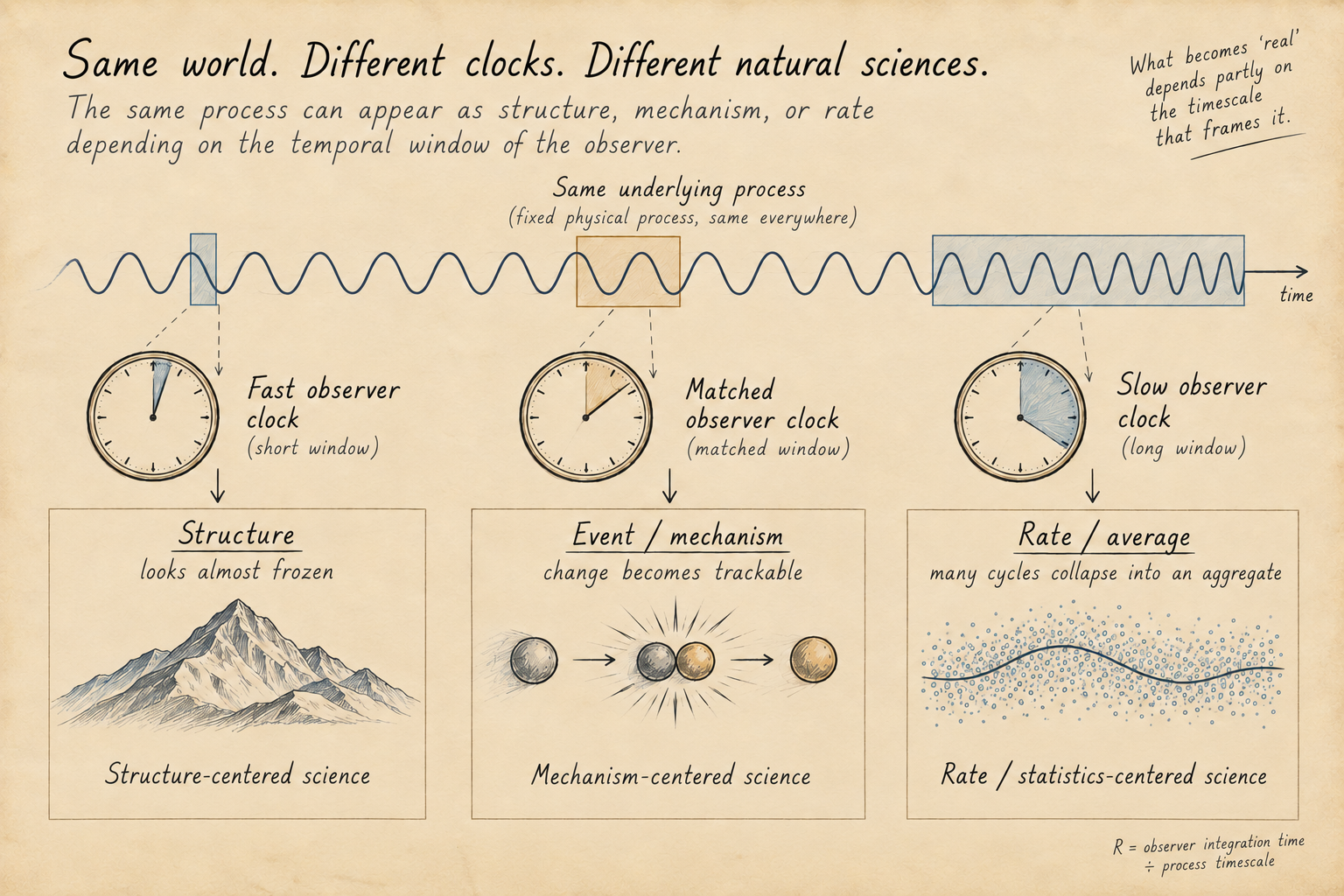
Science does more than collect facts. Language, instruments, mathematics and representation help determine which differences become visible enough to count as facts in the first place.
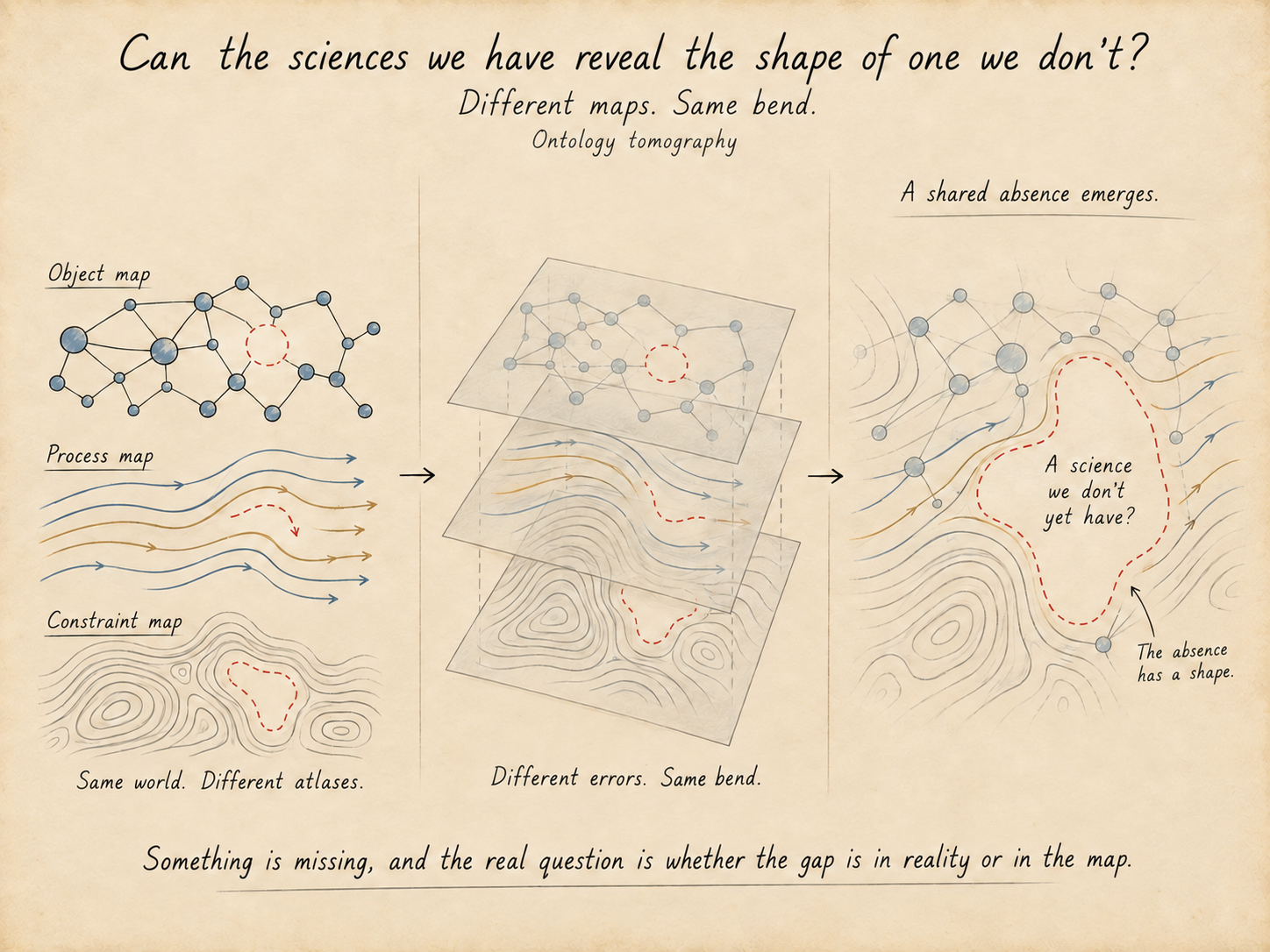
That raises a stranger possibility: perhaps some scientific unknowns are not missing answers, but missing maps on which the questions could appear.
The inquiry asks whether such absences might still leave a detectable outline — persistent anomalies, translation failures or strangely similar distortions across otherwise different theories. It proposes ontology tomography: compare how multiple scientific maps fail and look for structure that survives the change of representation.
Advanced AI could eventually help by building genuinely different maps, but novelty only matters if it produces new predictions or interventions that reality can push back against.